

Plan your day in a simpler way, without the pressure
Lokus is designed to help you organize your day without seeing everything at once.
It separates your time so you can focus on what matters now, instead of managing everything all the time.
Why most planning systems create pressure
Most tools are built to show you everything.
Tasks, lists, reminders, schedules—all in one place.
It feels organized, but over time it creates friction.
Because your work, home, and personal life are all competing for attention at the same moment.
The result isn’t clarity. It’s constant context switching.
How Lokus organizes your day differently
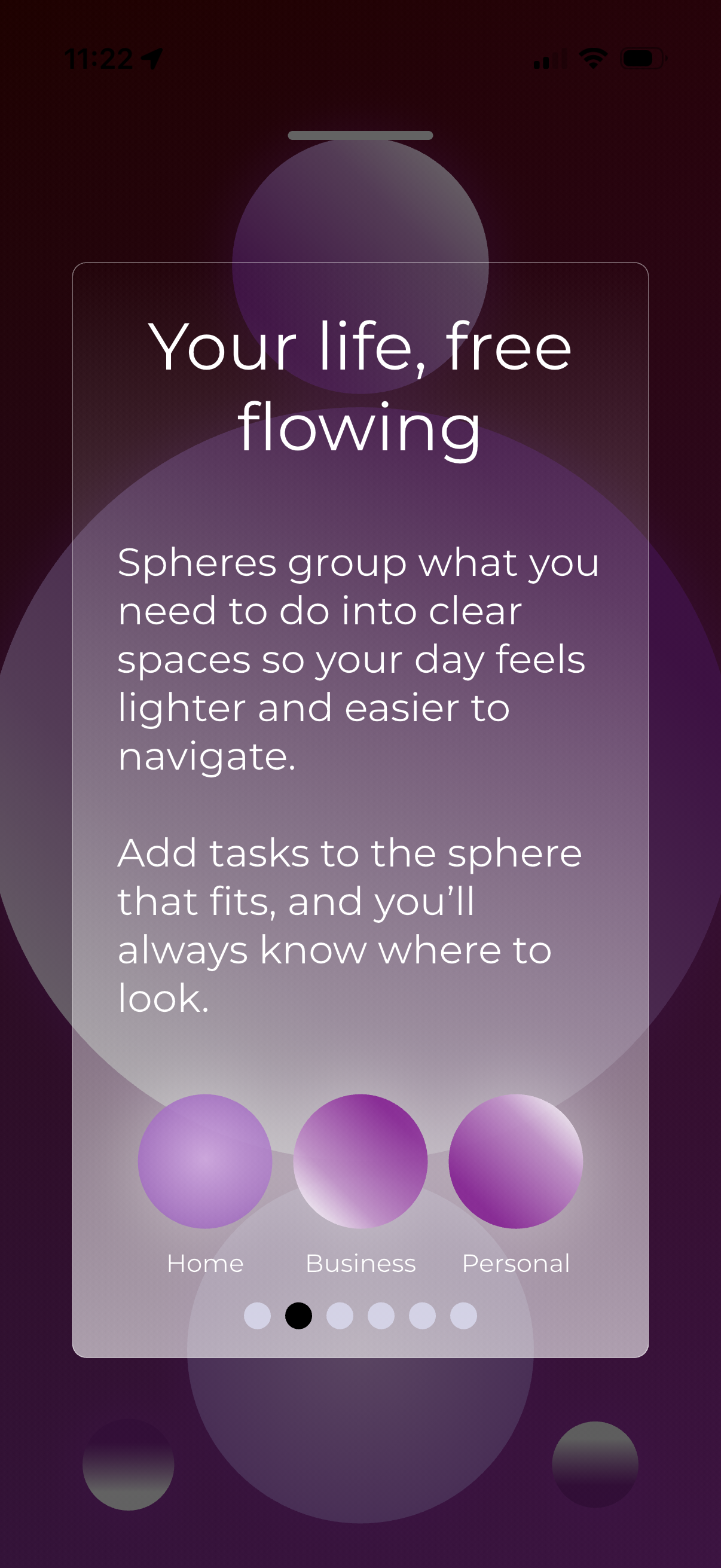
Lokus separates your day into three simple spheres:
Home, Business, and Personal.
Each sphere holds its own activities, so your priorities are grouped by context, not mixed together.
You don’t manage everything at once.
You move between parts of your day as they naturally happen.
How you use it (in practice)
Add activities by tapping into a sphere.
Each activity has a simple priority flow, so you can adjust what matters without rebuilding lists or schedules.
At the bottom of your screen, journaling spheres track how your day unfolds from start to finish and helps you understand your patterns over time.
Nothing is locked into a timeline. You open the app when you’re ready, and focus on what’s next.
Why this works
When everything isn’t visible at once, it stops competing for your attention.
That creates space.
And with space, it becomes easier to see what actually matters, make decisions, and move through your day with less pressure.

A different approach to productivity
-
Productivity tools shape how people think, feel, and live.
For decades, they have optimized for control, efficiency, and output often at the expense of mental clarity, well-being, and humanity.
Lokus exists to define a new standard.
These principles guide how Lokus is designed, built, and experienced. They are not features. They are commitments.
-
If a tool makes you feel overwhelmed, it isn’t productive.
Many productivity apps increase cognitive load by:
* Presenting endless lists
* Overpacking calendars
* Forcing constant prioritization
* Demanding frequent decisions
Lokus is designed to "simplify perception".
When your mind is clear, action follows naturally.
-
Life doesn’t run on perfect schedules.
Energy fluctuates. Context shifts. The unexpected happens.
Rigid systems fail not because people lack discipline, but because they ignore reality.
Lokus embraces adaptation over adherence.
Plans should bend without breaking your sense of progress.
-
Traditional productivity systems try to control time.
Lokus helps you stay "oriented".
When you understand where your attention, responsibilities, and energy are directed, better decisions emerge without force.
Orientation creates calm.
Calm creates momentum
-
Stress is often treated as a personal failure.
In reality, it is frequently a design failure.
Lokus is intentionally calm by design:
* Minimal visual noise
* Gentle structure
* Fewer interruptions
A calm system supports sustained performance, not burnout cycles.
-
You cannot separate output from well-being.
Burnout, anxiety, and decision fatigue are productivity issues.
Lokus integrates reflection and mental clarity alongside planning because “how you feel shapes how you function”.
Supporting the mind is not optional.
-
Work does not exist in isolation.
Neither do responsibilities, relationships, or personal goals.
Lokus is designed to reflect the full human context, not just professional tasks.
A system that ignores life outside work creates imbalance.
-
Punishment doesn’t create progress.
Overdue markers, streaks, and constant reminders often create guilt. Not motivation.
Lokus replaces pressure with gentle guidance.
Progress should feel encouraging, not judgmental.
-
A productivity system should feel like support and not surveillance.
Lokus respects autonomy, privacy, and personal rhythm.
It adapts to you.
You are not meant to adapt to it.
-
Attention is fragile.
Every unnecessary alert, visual signal, or forced decision fragments it further.
Lokus minimizes noise so focus can emerge naturally.
Silence, when intentional, is powerful.
-
You are not your output.
Productivity exists to support a meaningful life. Not to replace it.
Lokus is designed to serve people, not turn them into systems.
-
Together, these principles define what we call “calm productivity”. This is a human-centered approach to organizing life and work without pressure, rigidity, or burnout.
Lokus is the first platform built explicitly around this standard.
It will not be the last.
And that’s the point.